Overview
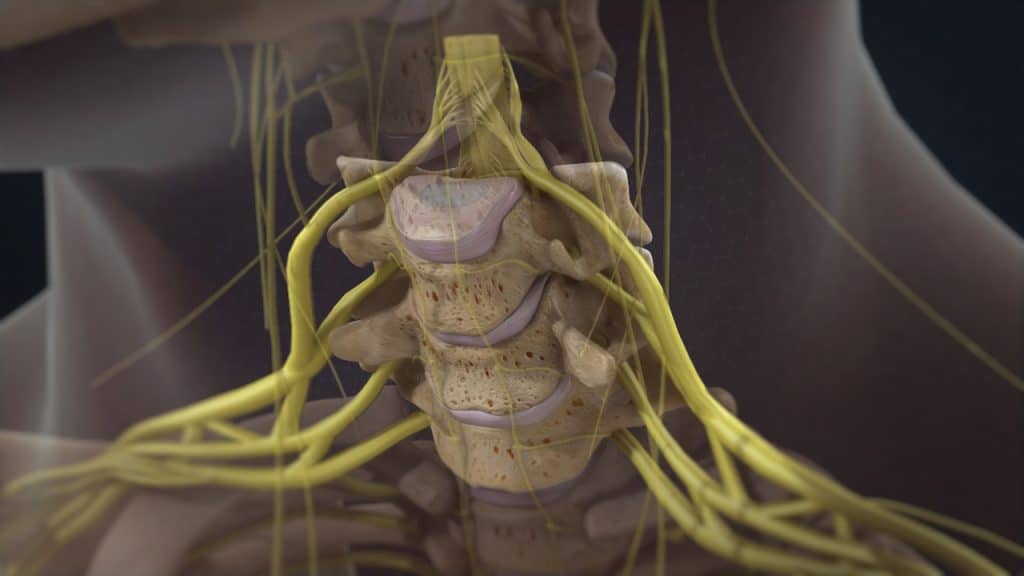
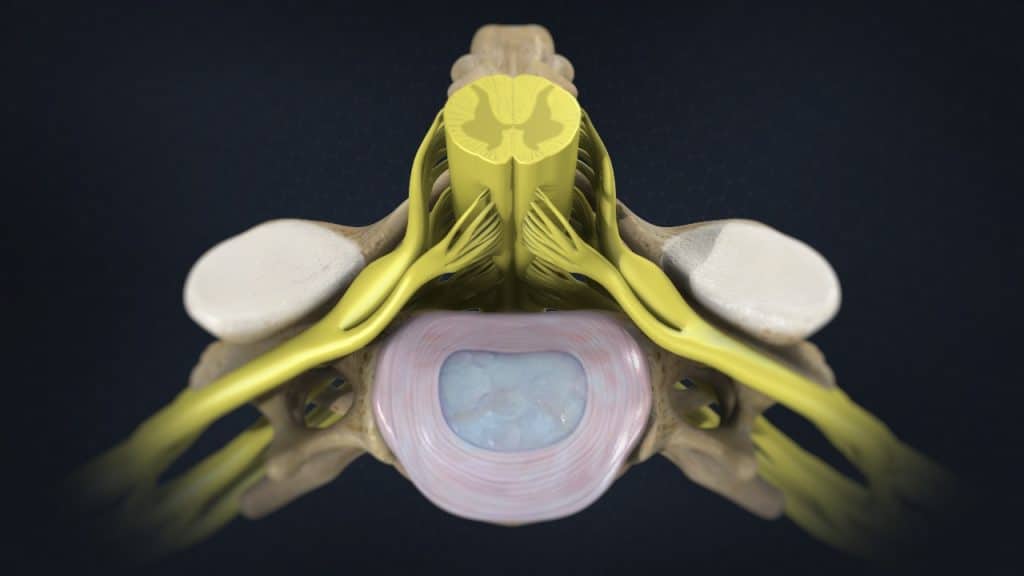
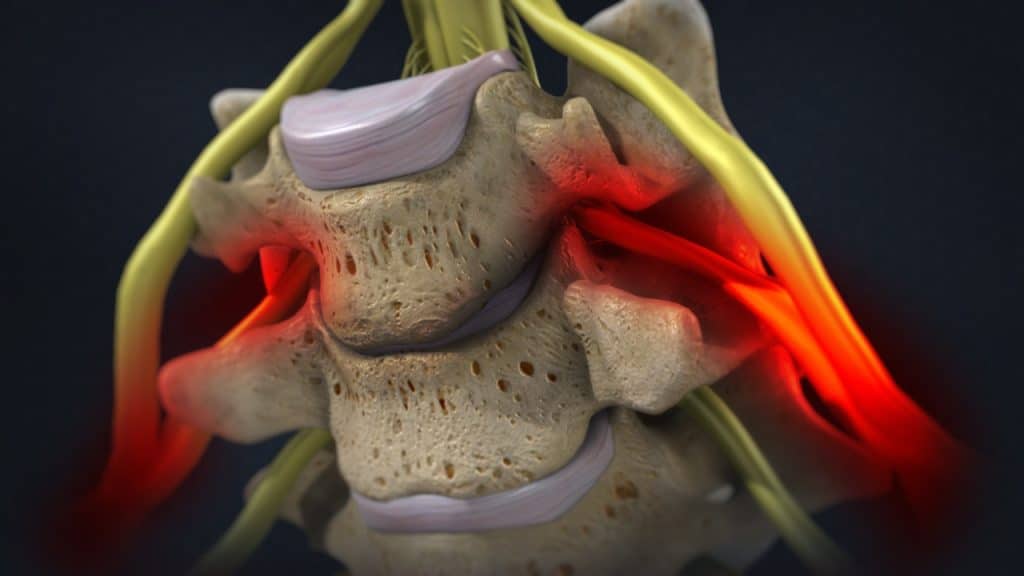
Cervical radiculopathy is a disease involving dysfunction of one or more nerve roots in the cervical spine that typically manifests as pain radiating from the neck into the distribution of the affected nerve root. It can be accompanied by sensory, motor, or reflex disturbances.
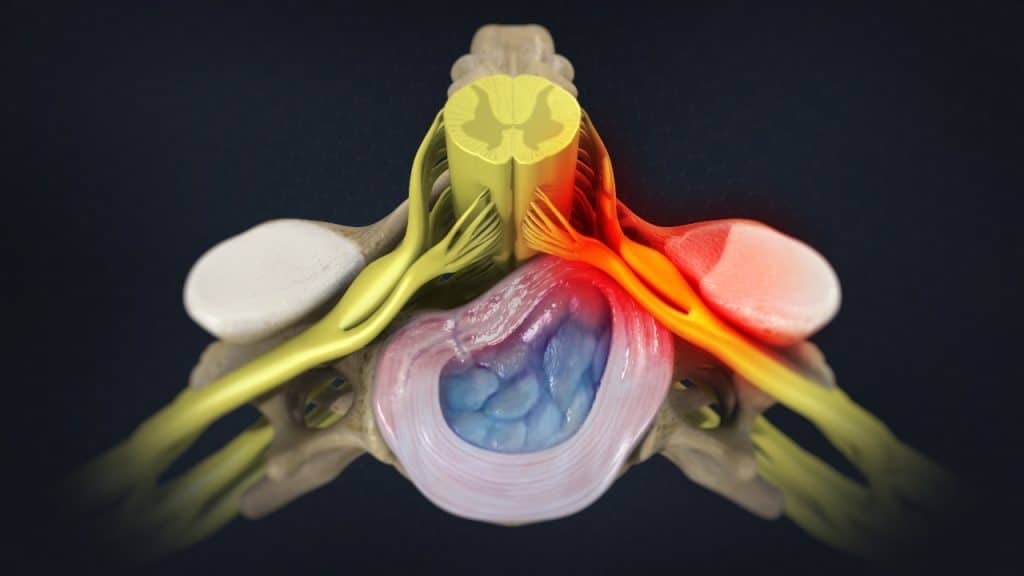
Any condition that somehow compresses or irritates a cervical nerve root can cause cervical radiculopathy. It most often results from degenerative disease in the cervical spine, but it can also occur due to an acute injury or illness.
Causes (Cervical Herniated Disc)
One common cause is a cervical herniated disc. A herniated disc can allow disc material to press harmfully against nearby nerve roots, triggering neck pain and possibly pain and nerve symptoms such as tingling, numbness, and/or weakness that can radiate down into the shoulder, arm, and/or hand.
Causes (Degenerative Disc Disease)
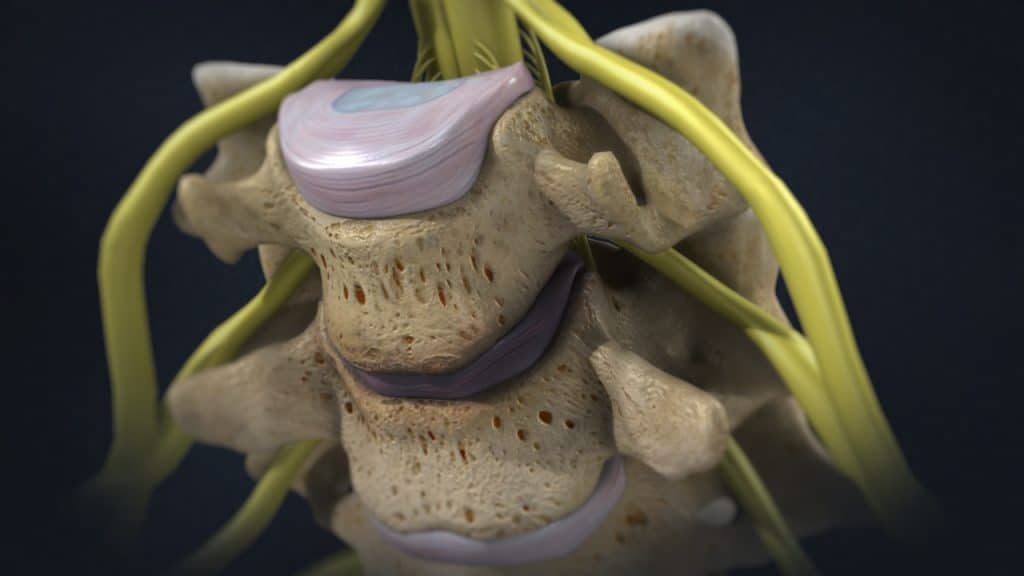
Another common cause of nerve root injury is a degenerative disc disease. Degenerative disc disease is an age-related condition that happens when one or more of the discs deteriorate or break down, allowing vertebral bones above and below the disc to shift out of position. The bones can touch, pinching nearby nerve roots, leading to pain and possibly accompanying neurological symptoms such as pins-and-needles tingling, numbness, and/or weakness in the areas served by the affected nerve roots.
Causes (Cervical Foraminal Stenosis)
Cervical foraminal stenosis is the most common cause of cervical radiculopathy. When a foramen (bony opening where a nerve root exits the spinal canal) narrows and becomes smaller, the nerve root has less space and may become impinged.
Degenerative changes related to cervical osteoarthritis and/or cervical degenerative disc disease may result in nearby bone spurs (osteophytes), thickening ligaments, or a disc bulging that creates harmful pressure against the nerve root in the foramen.
Causes (Failed Back Surgery)
Failed back surgery syndrome is a recognized medical diagnosis for chronic pain and symptoms that persist after a spinal surgery. Spinal surgery is basically performed to achieve two main goals: 1. Decompress a nerve root that is pinched or 2. Stabilize a painful joint. Failed Back Surgery Syndrome may occur when these goals are not achieved, or when spinal surgery adversely affects a nerve root or other structure near the operated field.
Symptoms
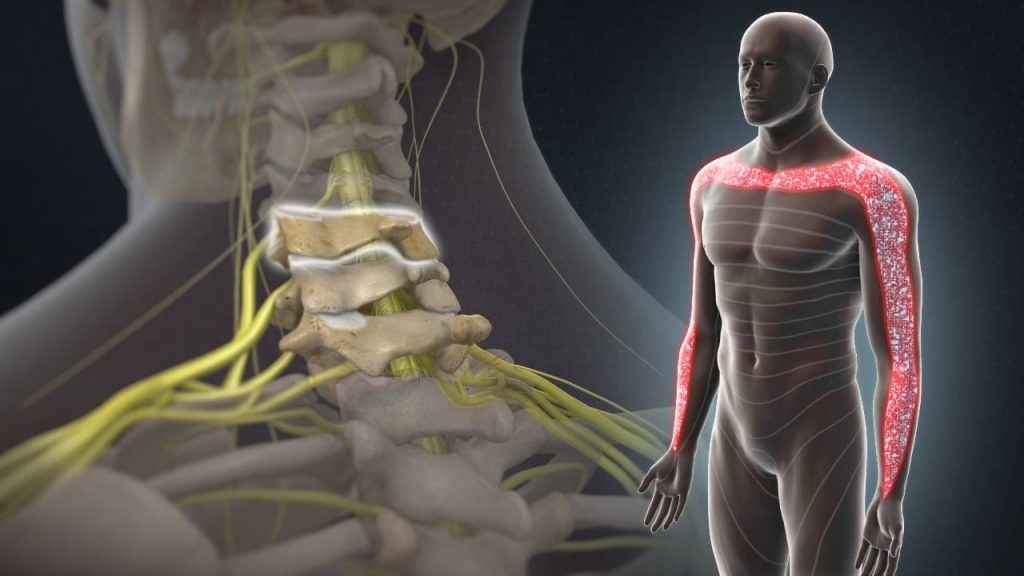
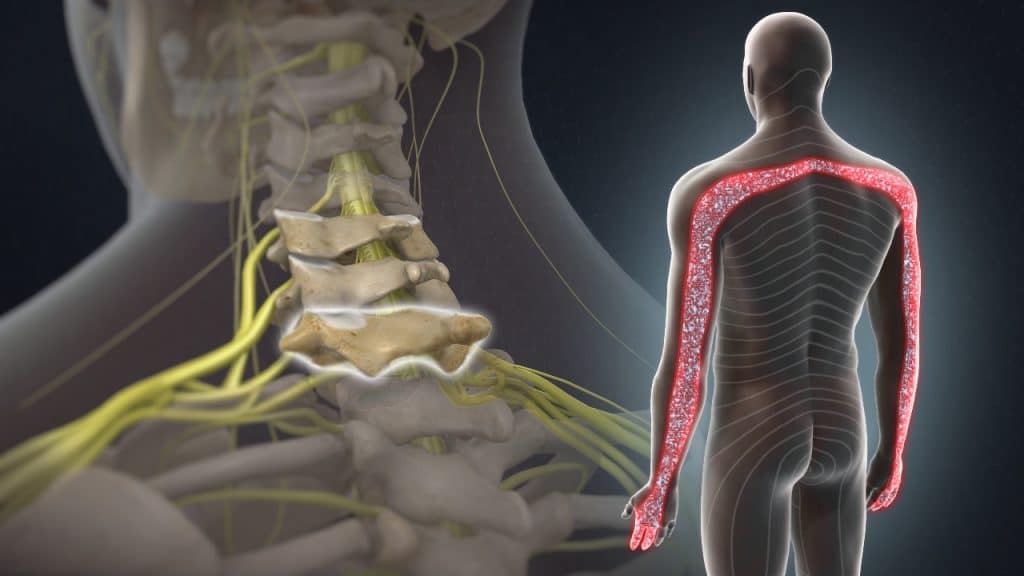
Cervical radiculopathy signs and symptoms differ depending on which nerve root is affected. Nerve root injury in the cervical spine most commonly involves one of the three lowest levels of cervical vertebrae, which are called C5, C6 and C7. Symptoms may include pain, pins-and-needles tingling, numbness, and/or weakness in the areas served by the affected nerve roots.
C5 Radiculopathy. Pain, tingling, and/or numbness may be felt in the lateral portion of the shoulder and halfway down the arm. Weakness may be experienced in the shoulder or upper arm.
C6 Radiculopathy. Pain, tingling, and/or numbness may radiate through the arm and forearm to the tip of the thumb. Part of the index finger may be included as well. Weakness may be experienced in the front of the upper arm (biceps) or wrist.
C7 Radiculopathy. Pain, tingling, and/or numbness may be felt down the arm and into the middle finger. Part of the index finger and part of the fourth finger may be included as well. Weakness may be experienced in the back of the upper arm (triceps).
C8 Radiculopathy. Pain, tingling, and/or numbness may radiate down the arm and into the fourth and fifth (little) fingers. Handgrip strength may be reduced.
Treatment
Treatment options for cervical radiculopathy depend on the location and severity of the injury. Acute cervical radiculopathy generally has a self-limited clinical course, with a rate of spontaneous improvement of up to 75%. Therefore, nonsurgical treatment is the appropriate initial approach for most patients.
The cervical radiculopathy can usually be treated successfully without surgery with a combination of pain management techniques, physical therapy and therapeutic spinal injections. Surgery may be recommended if the conservative therapies do not alleviate pain or if a significant neurologic deficit such as progressive muscle weakness or compression on the cervical spinal cord, known as cervical myelopathy, exists.
References
- Kraemer J., Hasenbring M., Kraemer R., Taub E., Theodoridis T., Wilke H.J.: Intervertebral Disc Diseases: Causes, Diagnosis, Treatment and Prophylaxis. Thieme 2009.
- Rhee J., Yoon T., Riew D.: Cervical Radiculopathy. Journal of the American Academy of Orthopaedic Surgeons 2007; 15: 486-494.
- Childress M., Becker B.: Nonoperative management of cervical radiculopathy. American Family Physician 2016; 93(9): 746-754.
- Woods B., Hilibrand A.: Cervical Radiculopathy: Epidemiology, Etiology, Diagnosis, and Treatment. Journal of Spinal Disorders & Techniques 2015; 28(5): 251-259.
- Baber Z., Erdec M.: Failed Back Surgery Syndrome: Current Perspectives. Journal of Pain Research 2016; 9: 979-987